
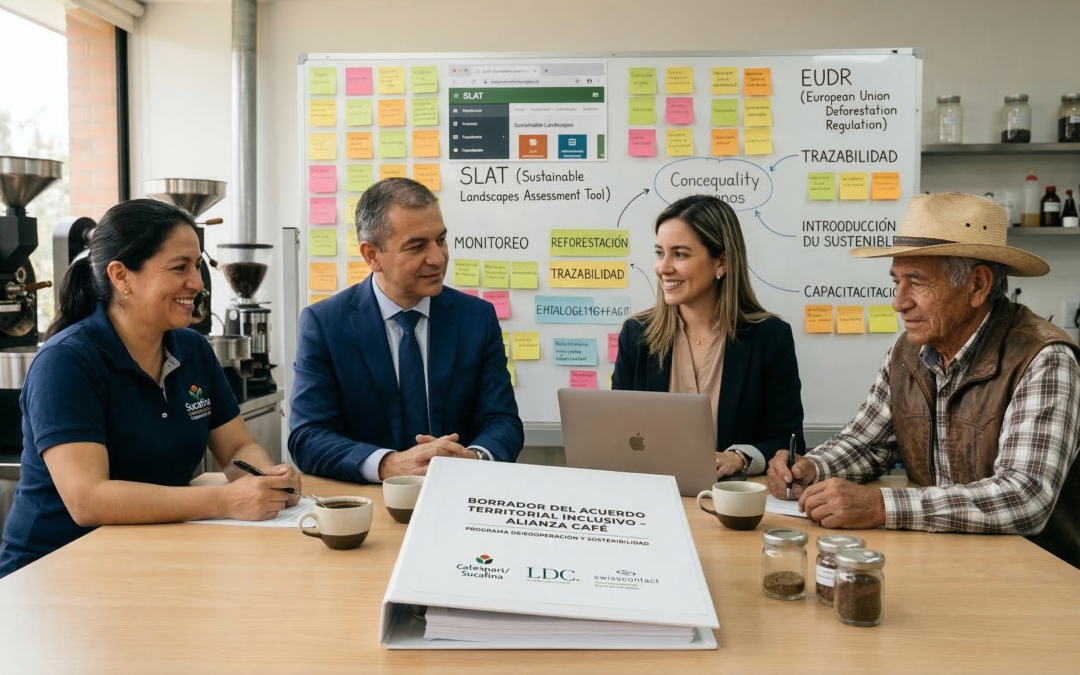
In the heart of the Swiss coffee industry, the conversation has reached a fever pitch. From the major trading houses to boutique roasteries, the focus is squarely on the European Union Deforestation Regulation (EUDR)
But as the Swiss coffee sector looks toward the future, a critical gap has emerged. Technical traceability is a tool for “pure compliance,” but it is not a strategy for “sector transformation”
The Sustainability Paradox
Why do sustainable value chains often fail? The data shows they struggle with systemic limitants:
-
Redistribution and Exclusion: Market-driven chains reward efficiency above all else, often punishing those who invest in costly sustainable values.
-
The “Seal” Challenge: External seals (like Fairtrade or Rainforest Alliance) face massive distribution challenges where the effort stays at one end of the chain and the benefits at the other.
-
Power Asymmetries: Company-specific seals often suffer from power imbalances where, despite participatory rhetoric, the buyer’s agenda is ultimately imposed on the producer.
The result? Producers “comply for the photo,” but the underlying system remains fragile.
The Solution: Inclusive Landscape Agreements
Research identifies a superior model where hundreds of individuals are transformed into collective actors with a single, powerful voice. This process follows three critical pillars:
-
Meaningful Participation: It’s not about how many people show up, but the scale and legitimacy of their representation.
-
Empowerment: Moving beyond a “seat at the table”. We must equip local actors with technical and political capacities—like cupping skills or negotiation training—to turn them into strategic partners.
-
Institutional Creativity: This is the “Secret Sauce”. When we create deliberative spaces, actors co-design rules that fit their specific reality, ensuring both instrumental and substantive coherence.
Case in Point: In Riosucio, Colombia, the ‘Los Cuernos del Diablo’ project used a deliberative scenario to create a tiered incentive model (10%, 15%, and 25% premiums) that redistributed value based on cup quality and organic practices.
Overcoming the “Complexity Trap”
On the other hand, Inclusive agreements often face the Complexity Trap: as stakeholders add more rules (carbon, gender, biodiversity), the system loses coherence and eventually implodes.
The way forward is the “Agreement on Minimums”. Instead of forcing a consensus on every single rigid rule, we establish a common territorial platform. This allows diverse coalitions to build their own specific sustainability layers on top of a shared governance base.
A Legacy for the Industry
For Swiss roasters and investors, the goal is not just a “successful project” but a governance legacy. When international cooperation or short-term funding pulls out, the territory must remain with an active Inclusive Agreement and empowered local institutions.
Technical traceability is a tool; Inclusive Governance is the insurance policy.